
Do All Disc Prolapses Require Surgery?


Few spinal conditions create as much anxiety as being told you have a “disc prolapse” or a “slipped disc”. Many patients understandably imagine that surgery will inevitably be required, particularly if the pain is severe. Fortunately, that is usually not the case.
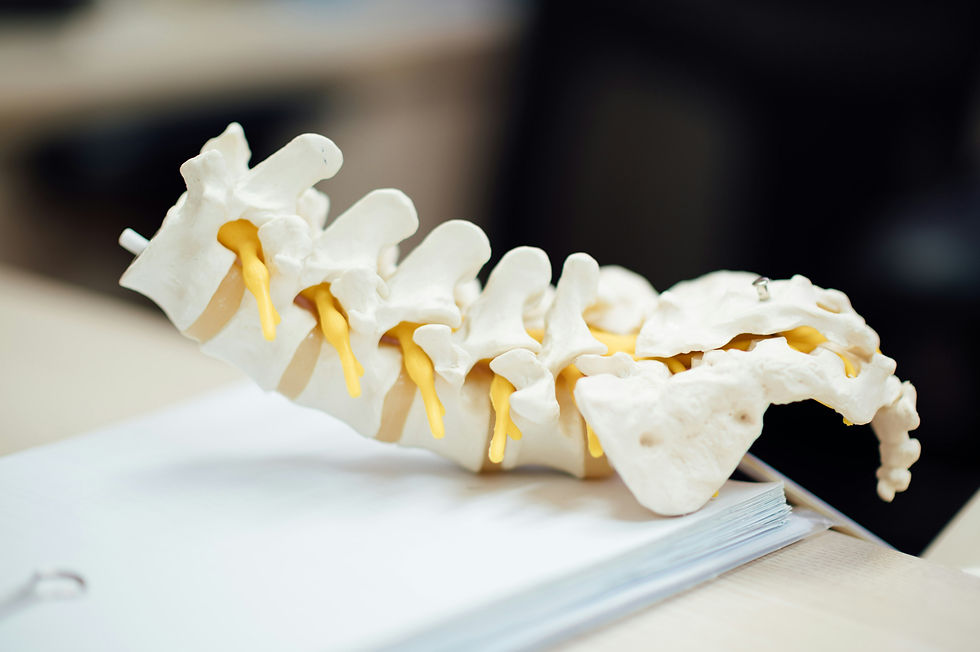
A lumbar disc prolapse occurs when part of the intervertebral disc protrudes backwards and irritates or compresses one or more of the spinal nerves. This commonly causes sciatica — pain radiating down the leg — and may also produce numbness, tingling, or weakness. A lumbar disc has two major components: a relatively tough outer membrane called the disc annulus fibrosis (or capsule), and the softer and juicier disc contents which are rubbery and which acts as a shock absorber, called the nucleus pulposus (or the inner core). Sometimes the outer membrane bulges out (a prolapse), and sometimes the membrane can rupture allowing the inner core to extrude out through a breach in the capsule (herniation). Usually a disc bulge occurs on one side and typically affects a single nerve root causing sciatica in the leg on that side, but sometimes a disc can rupture and the herniation can be very large and central, and when this happens it can affect all the nerves in the lower back, including those that travel to both legs and even the bowel and bladder region, and this can be a medical emergency. Disc prolapses are extremely common and can affect adults of almost any age, although they are particularly frequent in middle age. Symptoms may begin suddenly after lifting or twisting, but sometimes develop without any obvious precipitating event.
The good news is that most acute disc prolapses improve naturally with time and rest, and the majority of acute disc prolapses usually resolve within around 12 weeks. The human body has a remarkable ability to gradually shrink and reabsorb prolapsed disc material, and even extremely large disc prolapses can completely resolve without surgery. As inflammation settles around the affected nerve, symptoms often improve substantially over a period of several weeks. If pain can be adequately controlled many patients therefore recover without needing any form of surgery, and the initial management of a disc prolapse rarely requires surgery unless there are any “red flags” that could trigger earlier intervention. Treatment usually involves a combination of activity modification, oral analgesia medications, physiotherapy, and occasionally CT-guided cortisone injections. Remaining mobile is generally preferable to prolonged bed rest, although patients should avoid activities that significantly aggravate symptoms.
So when is surgery considered? Surgery may become appropriate when:
Severe leg pain persists beyond three months despite conservative treatment;
There is progressive weakness in the leg or foot (such as a foot drop);
Symptoms are significantly affecting quality of life or the ability to work;
There is evidence of significant nerve compression that may not recover without surgery;
Rare emergency symptoms develop, such as bowel or bladder dysfunction (also known as Cauda Equina Syndrome).
The operation most commonly performed is called a lumbar microdiscectomy. This procedure aims to remove the portion of disc that is compressing the nerve while preserving as much normal anatomy as possible and is performed with an operating microscope. In appropriate patients, surgery can provide very rapid improvement in leg pain, although numbness and weakness may sometimes take longer to recover. Most patients wake up in recovery with no sciatica pain at all, and although weakness and numbness may also be seen early after surgery these symptoms typically take a lot longer to resolve, sometimes months. A microdiscectomy procedure is performed through a small skin incision and is minimally invasive, and most patients can go home the following day.
Importantly, not all back pain is caused by disc prolapses. Many patients have degenerative changes on their MRI scans that may not actually be responsible for their symptoms, and clinical assessment by an experienced Neurosurgeon therefore remains extremely important. Patients are often surprised to learn that their MRI scan findings can look quite dramatic even when their symptoms are relatively manageable. Equally, some people with very severe sciatica may only have only modest radiological abnormalities. This again highlights why scans must always be interpreted in the context of a patient’s symptoms and their examination findings.
One of the most important aspects of spinal care is avoiding unnecessary surgery. Most patients with acute disc prolapses improve without an operation, and careful assessment is essential before considering surgical intervention. On the other hand, appropriately selected patients can experience substantial improvements in pain and function after surgery. This is an extremely important conversation to have with your treating Neurosurgeon if you are being offered disc surgery.
If you have recently been diagnosed with a disc prolapse, it is important not to panic. The vast majority of patients improve over time, and even when surgery is ultimately required modern spinal surgical techniques are generally very safe and effective when performed for the right reasons. Remember, surgery is only generally recommended if your specialist feels that it is necessary and reasonable, and also typically only after all non-operative treatments have been exhausted and explored.


This was a really insightful read, and I completely agree with the points made about disc prolapses not always needing immediate surgical intervention. For a long time, I, too, underestimated the body's ability to heal and recover from such issues without going straight to the operating room. It’s a common misconception, and I appreciate you breaking it down so thoroughly, avoiding the temptation to oversimplify such a complex topic. The way you’ve explained the mechanisms behind disc prolapses and why certain approaches might fail is particularly valuable. It really makes you pause and reconsider. I've seen this information shared widely across my networks, which speaks to its relevance. It's refreshing to find content that encourages a more nuanced understanding rather…
This is a really interesting perspective on the topic. I interesting guide appreciate the effort that went into writing this article, and https://en.wikipedia.org/wiki/Blog I think more people should be aware of these points.
This post really hit home, articulating so many of my own long-held feelings about disc prolapses. It's fantastic to see this topic explored so thoroughly, and honestly, I've saved the link for those moments when friends or family inquire about it. The clarity provided here cuts through a lot of the noise surrounding disc prolapses, presenting the truth in a way that's both accessible and informative. It’s refreshing to find a resource that gives disc prolapses the in-depth attention it truly deserves. I particularly appreciated the nuanced discussion, which I feel is often missing when this subject comes up. It's definitely one of those topics that never gets old when it's presented with such insight and understanding, making complex issues…